Joy Metrics is teaming up with the Mayo Clinic Learn More >>>
Predictive Workforce Intelligence
A practical system for measuring, reducing, and tracking clinician strain.
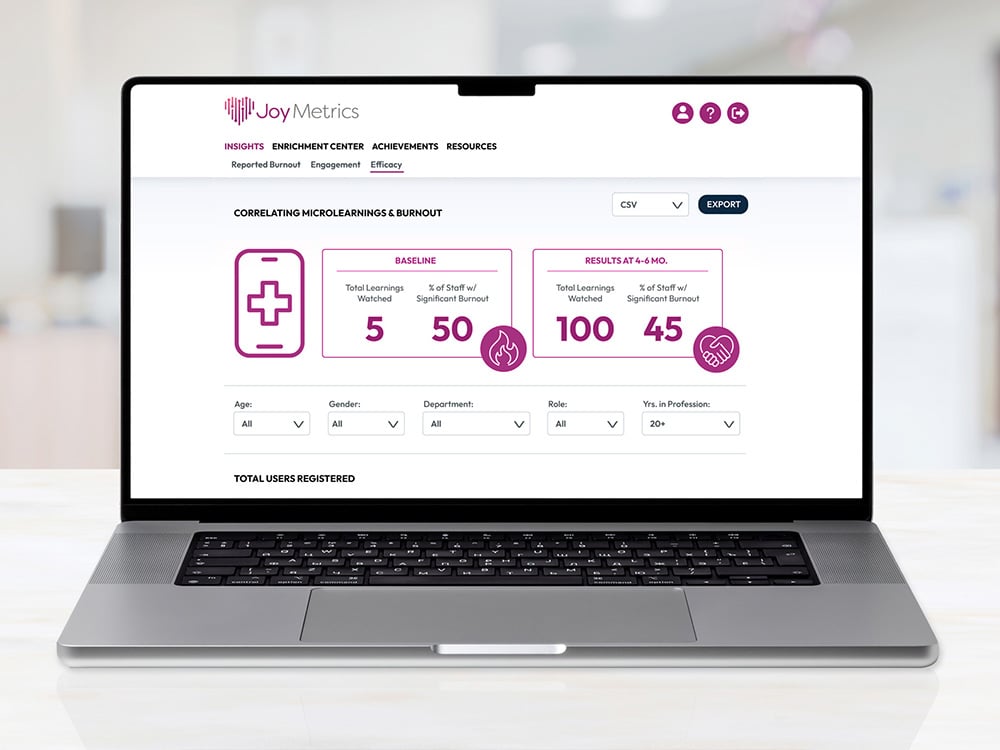
Joy Metrics (formerly SE Healthcare) helps healthcare organizations move from one-time wellness efforts to an ongoing, data-informed approach. See risk and drivers clearly, deploy targeted interventions, and monitor progress over time.
Healthcare burnout needs more than quick fixes.
Burnout is a chronic operational issue. To improve retention, safety, and performance, leaders need two things at the same time:
Clear measurement of where strain is rising and what is driving it
A consistent way to respond with support that fits real clinical work
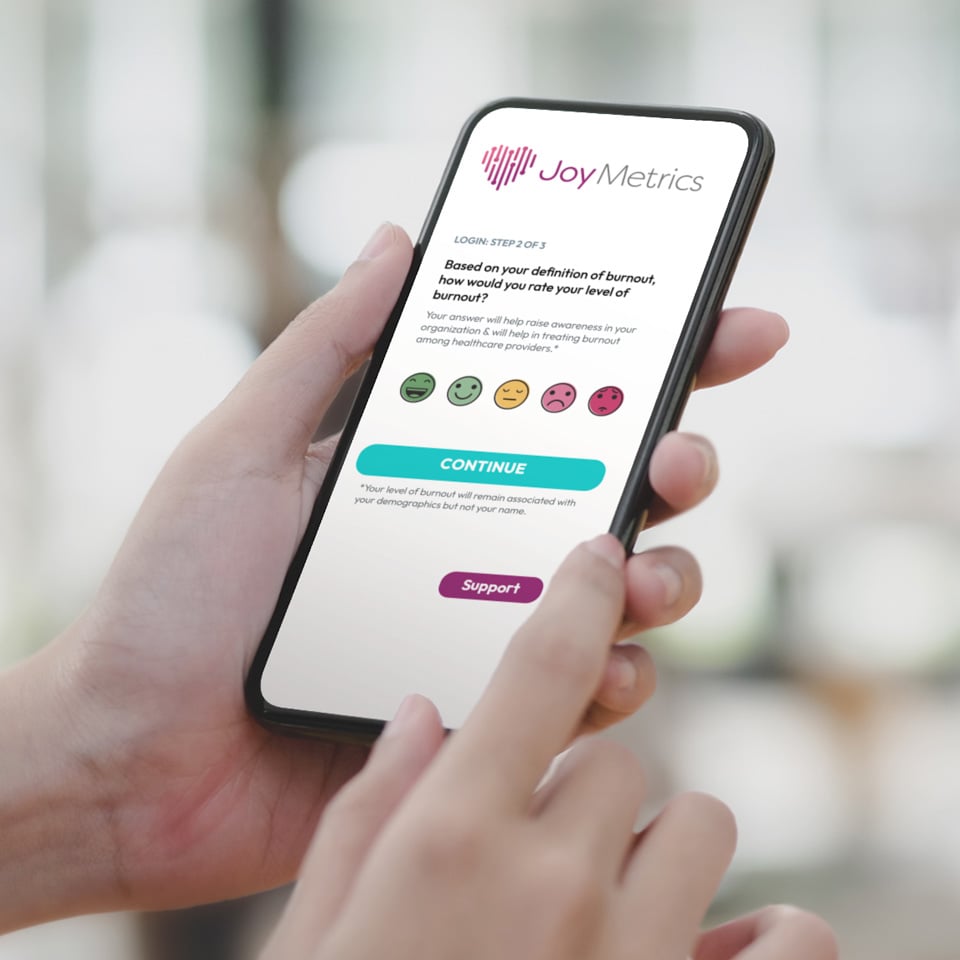
Validated assessment and benchmarking to quantify risk and surface the drivers.
Targeted Interventions
Evidence-based microlearnings and programs mapped to the drivers you see.
Ongoing Monitoring
Monthly analytics to track progress and keep leaders aligned.
Add operational signals to your workforce health view.
When available, Joy Metrics will pair clinician assessment with objective operational workload signals to help leaders see early warning indicators sooner and intervene earlier.
Designed for zero additional clinician effort.
When available, highlight ambient data collection through existing systems so leaders get insight without adding tasks for clinicians.
Joy Metrics for Nurses
Nurse-specific insights and interventions built for unit realities.
Understand risk and drivers by unit, role, and shift
Support nurses with short, practical interventions
Joy Metrics provides a comprehensive solution with assessment, action planning, microlearning interventions, and continuous reporting, supported by a dedicated Customer Success Manager.
Burnout prevention you can measure.
35% reduction in highest-level burnout symptoms
52% of participants report lower burnout levels
86% incorporate burnout-reduction strategies in their professional and personal lives
GET IN TOUCH
What is your organization's level of burnout?
Request a demo to view insights by unit and role, and see how interventions align to the drivers you want to change.